
Orthotics: Benefits, Myths and Evidence
Orthotics: Benefits, Myths and Evidence
Orthotics are often recommended for people with foot pain, sports injuries, flat feet or problems with the way they walk or run. But with so much information available, it can be difficult to know what orthotics actually do — and whether you really need them.
Are orthotics supposed to “correct” your feet? Will they make your feet weaker? Are custom orthotics always better than store-bought insoles?
At The Pod Practice we prescribe and make orthotics specifically for an individual’s feet and requirements.
Orthotics can be useful for certain foot and lower-limb problems, but they aren’t a universal solution for every type of pain.
What are orthotics?
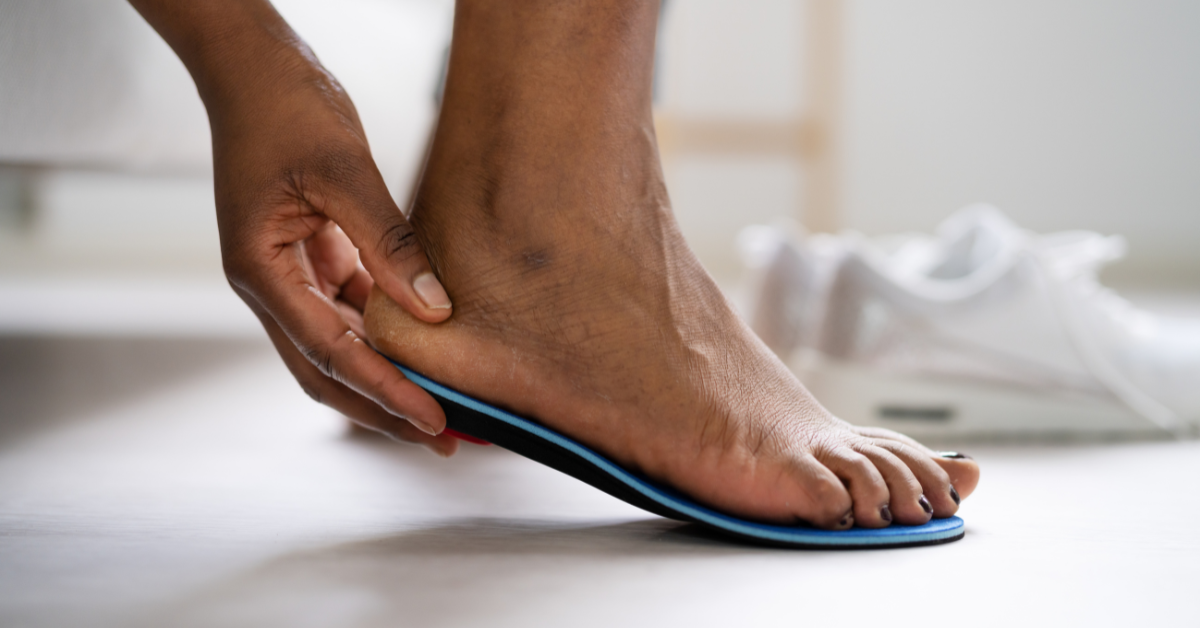
Orthotics are devices placed inside footwear to support, redistribute pressure or influence how the foot functions during movement.
Rather than treating the appearance of the foot alone, podiatrists consider the person’s symptoms, function and overall movement.
An orthotic assessment may consider your symptoms, foot structure, movement patterns, footwear and activity level. At The Pod Practice, biomechanical assessment and gait analysis are used to help identify movement-related problems before recommending an appropriate treatment approach.
The purpose isn’t simply to add an arch underneath your foot. Depending on the individual, an orthotic may be used to redistribute pressure, provide support or modify certain aspects of foot function.
Myth 1: Everyone with flat feet needs orthotics
Not necessarily.
Flat feet are common, and having a lower or flatter arch doesn’t automatically mean something is wrong.
Some people with flat feet have no pain or functional problems and don’t require treatment. Others may experience symptoms during walking, running or sport.
Rather than treating the appearance of the foot alone, a podiatrist should consider the person’s symptoms, function and overall movement.
Research into orthotics for adults with flat feet has also found that the evidence is not strong enough to suggest that orthotics are automatically required simply because someone has flat feet.
Myth 2: Orthotics weaken your feet
This is one of the most common concerns.
The idea is that if an orthotic supports your feet, your muscles will stop working. However, the relationship between orthotics and foot strength is more complicated than simply saying that orthotics “switch off” the muscles.
Orthotics can be prescribed as one part of a broader treatment plan. Depending on the problem, treatment may also include strengthening, mobility work, footwear changes, load management or rehabilitation.
Myth 3: Custom orthotics are always better than store-bought insoles Custom doesn't automatically mean better for everyone.
There are situations where a prefabricated insole may be appropriate and situations where a customised device may be more suitable.
For example, research into plantar heel pain has found that foot orthoses can provide some pain relief, but studies have not consistently shown custom orthotics to be superior to prefabricated alternatives.
This is why an assessment is important. The question isn’t simply “custom or off-the-shelf?” It is what does this person need?
Myth 4: Orthotics cure foot pain
Orthotics aren’t a magic cure.
Foot pain can have many causes, including overuse, changes in training, injury, footwear, muscle weakness and medical conditions.
For some conditions, orthotics may form part of an effective treatment plan. For others, different approaches may be more appropriate.
Recent research into plantar fasciitis, for example, suggests that foot orthoses can help reduce pain, but they don’t necessarily improve every aspect of function. Researchers also emphasise that orthoses should generally be considered as part of a broader treatment approach rather than as the only treatment.
Myth 5: Athletes only need orthotics if they have an injury Not necessarily.
Some athletes seek assessment because they already have pain or a recurring injury. Others may be assessed because they have specific biomechanical or footwear concerns.
Research involving runners has found evidence that foot orthoses may reduce lower-limb injury risk, although the evidence does not mean that every runner should use orthotics.
The decision should be based on the individual runner, their symptoms, training demands and assessment findings.
So, when might orthotics be useful?
Orthotics may be considered when a person has a specific problem where modifying foot loading or movement could form part of the treatment plan.
Examples may include certain types of:
- Heel and plantar foot pain
- Forefoot pain
- Sports-related foot problems
- Pain associated with particular foot mechanics
- Pressure-related foot problems
- Recurring lower-limb symptoms where foot function is a contributing factor
Importantly, the presence of one of these conditions doesn’t automatically mean orthotics are required.
What does the evidence actually tell us?
The evidence around orthotics is mixed — and that’s important.
Some studies demonstrate improvements in pain or injury outcomes, while others find little difference between different types of orthoses or other treatments.
For runners, a systematic review of more than 5,000 runners found that foot orthoses were associated with a lower risk of lower-limb injuries. However, other research has found that orthoses don’t necessarily improve running performance and may affect running economy in some circumstances.
This highlights an important point: orthotics should be prescribed for a reason, not simply because they are available.
Do you need orthotics?
If you’re experiencing persistent foot pain, recurring sports injuries or discomfort that hasn’t improved with changes to footwear or activity, an assessment may help determine what is contributing to the problem.
At The Pod Practice, biomechanical assessment, gait analysis and footwear evaluation can be used alongside your symptoms and activity requirements to determine whether orthotics are appropriate.
The goal isn’t necessarily to put everyone in orthotics. It’s to understand why you’re experiencing the problem and what treatment is most appropriate for you.
If orthotics are recommended, they should form part of a personalised treatment plan rather than being viewed as a standalone solution.
The bottom line
Orthotics can be valuable tools in podiatric treatment, but they’re not suitable or necessary for everyone.
The best approach is to look beyond the insert itself and consider your symptoms, foot function, footwear, activity and overall movement.
If you’ve been wondering whether orthotics could help with your foot pain or sporting performance, a professional assessment can help you make an informed decision based on your individual needs.